
From budtenders to wellness consultants
The rise of clinical literacy
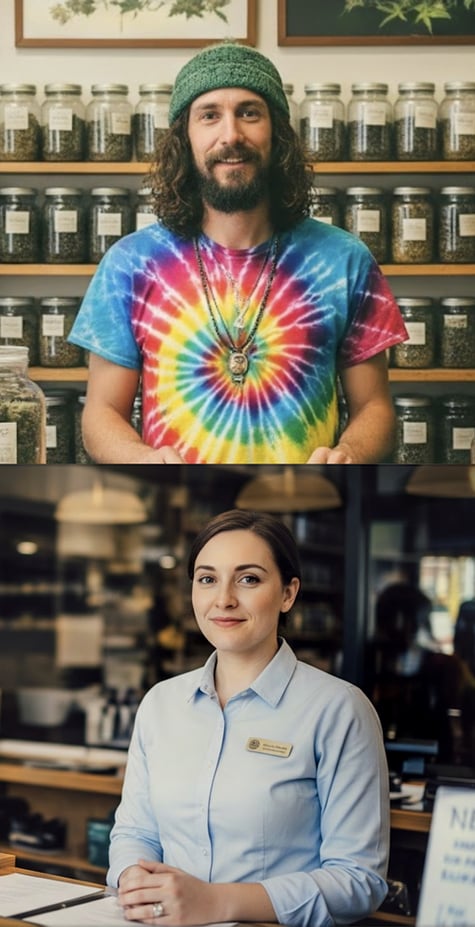
For nearly a decade, the budtender has been the face of the legal cannabis industry for consumers. Often stereotyped as a casual enthusiast with a knack for strain names and a passion for high THC percentages, this role was pretty-much the retail bedrock of the ‘green rush’ era.
But as the industry matures, the retail landscape has shifted beneath our feet. The days of simply asking "indica or sativa?" are largely over. We have entered the era of the Wellness Consultant.
The convergence of federal rescheduling conversations, an aging consumer demographic, and the increased knowledge of isolated minor cannabinoids has fundamentally changed what customers expect when they walk into a dispensary. They aren't just looking to get high; they are looking to get healthy, to sleep better, or to manage anxiety without pharmaceuticals.
This shift has created a new professional standard: clinical literacy.
The end of "high THC" dominance
For years, the market was dominated by a single metric: THC percentage. But as the industry matures, the "highest THC for the lowest price" customer is becoming a lower-margin demographic. The high-value growth is now found in the functional consumer.
These customers are asking complex questions. They want to know the interaction between CBN (cannabinol) and their melatonin cycle. They are curious if THCV (tetrahydrocannabivarin) actually suppresses appetite or if it just provides a clearer head-high. They are asking about terpene profiles not for flavor, but for their anti-inflammatory properties.
A frontline employee who relies solely on recreational experience cannot answer these questions. In a market where products are increasingly specialized, "I tried this and it got me super stoned" is no longer a sales pitch —it may be a liability.
For job seekers
why passion is no longer enough
If you are currently working in cannabis retail or looking to break in, this shift is your biggest opportunity —if you adapt.
Basic product knowledge is now a commodity. Every applicant knows what an edible is; to stand out, you need to demonstrate your understanding of the science of the endocannabinoid system (ECS).
Employers are no longer just looking for culture fits; they are looking for staff who can safely guide a grandmother through her first tincture purchase or explain the biphasic effect to a nervous first-timer.
How to leverage clinical literacy for higher pay
Get certified.
Don't rely on internal training alone. Seek out third-party certifications in cannabis physiology. Putting "Certified CBD/Cannabinoid Consultant" on your resume signals that you treat this as a career, not a gig.
Speak the language of outcomes
In interviews, don't talk about "strains"; talk about "regimens." Describe how you would help a customer seeking pain relief versus one seeking creative focus.
Negotiate on retention
When discussing wages, highlight that educated customers return. A staff member who can explain why a product works builds trust. Trust builds loyalty. Position yourself as a retention asset, not just a cashier.
For employers
the ROI of the ‘white coat’ approach
Industry professionals all know the pain of the current market: price compression. As flower prices stabilize at lower tiers, margins get squeezed. The only way to combat this is by increasing basket size and customer lifetime value (CLV).
Additionally, ‘shadow’ turnover is killing retail brands. Customers leave not because of price, but because of bad advice. If a customer buys a sleep aid that keeps them awake because the staff didn't understand the terpene profile, that customer is gone forever. Investing in deep, medical-grade training for your staff is an insurance policy against customer churn.
How how clinical literacy becomes a revenue engine
A traditional budtender might sell a single eighth of flower.
A clinically literate wellness consultant
can build a regimen: a tincture for daily maintenance, a vape for acute breakthrough anxiety, and a CBN gummy for sleep.
By focusing on the therapeutic outcome rather than the product category, the consultation naturally expands to cover multiple needs.
Bridging the gap
The challenge, of course, is connection. High-level candidates often struggle to identify which retail brands truly value their expertise, while employers struggle to filter through thousands of generic applications to find the true professionals.
This is where CareersinCannabis.com operates as the signal in the noise. We have optimized our matching algorithms to look beyond basic keywords. We help employers identify candidates who demonstrate that critical clinical aptitude, and we help professional wellness consultants find clinical-grade employers willing to compensate for that expertise.Whether you are looking to build a team of experts or find a home for your specialized skills, our platform is designed to elevate the connection beyond the transaction.
The future is functional
The line between healthcare and retail isn't just blurring; in many states, it is vanishing. As we look toward a potential Schedule III reality, the pharmacy model and the dispensary model will continue to merge.
For the front-line worker, this is the moment to level up. The industry doesn't need more salespeople. It needs guides. It needs translators who can turn complex botanical science into accessible human solutions.
The era of the budtender may be fading, but the age of the Wellness Consultant is just beginning. Those who invest in their clinical literacy today will be the leaders of the showroom floor tomorrow.
Keep up your professionalizing move from retail clerk to wellness consultant
THC potency paradox
Some customers still chase high percentages, but note the shift in their spend.
25% THC preferred by US consumers
Premium shift. High-potency products (28%+) sell 6% more units but generate 12% higher total sales value, proving consumers will pay a premium for perceived quality, not just the "high."
Market divide: Mature markets are seeing THC levels decline from 30% to 27% as testing standards tighten and consumers seek flavor (terpenes) and entourage effect over a THC blast.
The wellness-driven consumer
The "stoner" stereotype is statistically gone. Most consumers now prioritize functional outcomes.
64% of consumers identify relaxation as primary goal
50% of medical patients report using cannabis instead of alcohol
45% of users consume to improve sleep quality or help them fall asleep
40% of consumers regularly use CBD products with THC, desiring balanced, therapeutic effects
Minor cannabinoids + formats
43% of the market pre-roll + infused pre-rolls
11-14% annual expanse for beverages
baseline customer requests:
CBN for sleep CBG for focus THCV for energy/appetite
Generational spending shifts
63% of US sales are Millennials + Gen Z
(fastest-growing segment)
11.3% YoY increase in market share
90% of boomers use for medical conditions
• • • • • • • • • • • • • • • • • • •
SOURCES
Flowhub: 2026 Cannabis Industry Statistics
Headset: Tracking Potency - The Data Behind Rising THC Levels (2025)
Cannabis Science Tech: 2025 State of the Industry
mg Magazine: 2026 Cannabis Marketing Playbook